
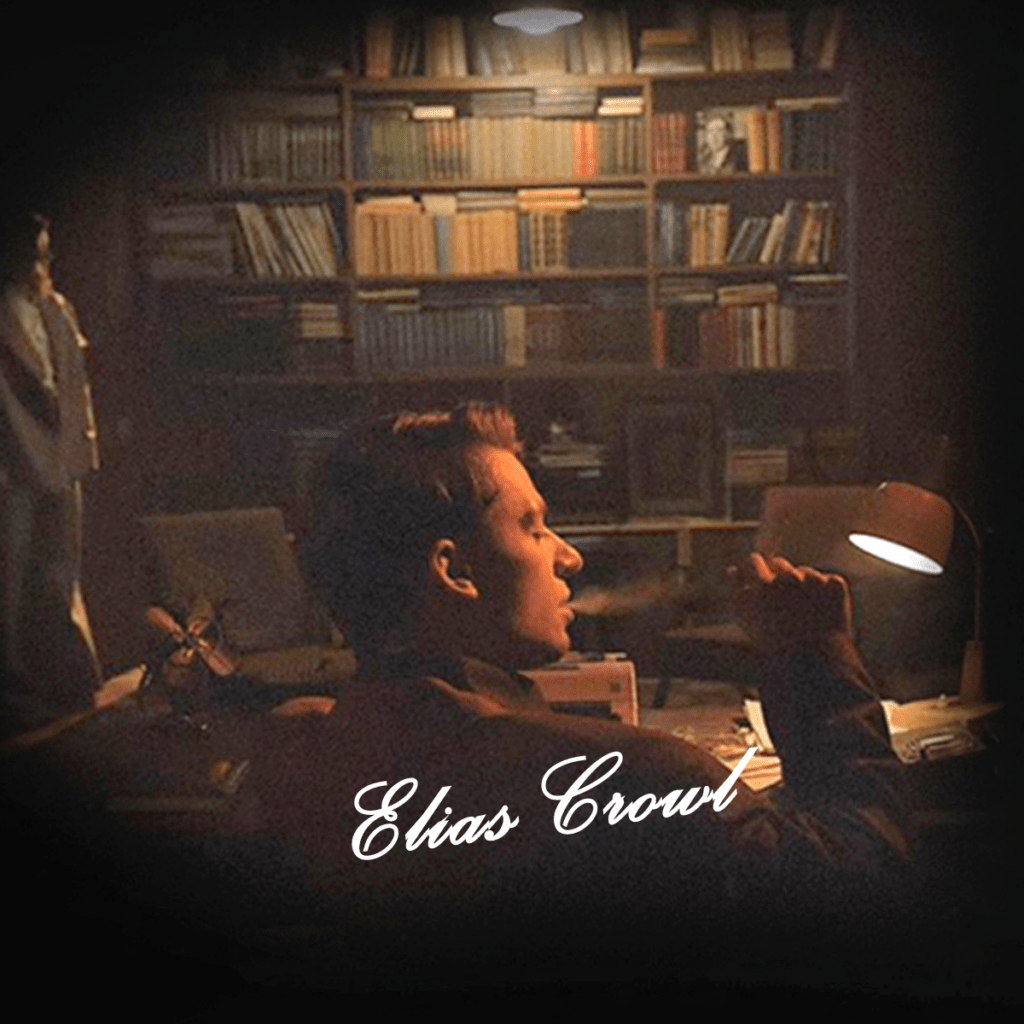
There is nothing to tell, i think.
My name is Elias Crowl (born 1986 in New York). I live and work in Manhattan. Before turning to writing, I worked as a night porter, sound engineer for off-Broadway productions, and library assistant—roles that shaped my affinity for sounds, routines, and the invisible in everyday life.
I studied English and psychology in New York at one point, but dropped out to “listen to the voices of the city.” I initially published short stories in independent literary magazines.
My texts revolve around urban rituals, the limits of perception, and the question of how much reality a person can endure without inventing it.
When I’m not writing, I collect found objects—coasters, scraps of paper, old public transport tickets—and note the timbres of my apartment building.
I live with my books, a cat, and a refrigerator in a small apartment near the Lower East Side. I work early in the morning, drink two cups of coffee and leave my window open a crack. And i love rum balls and Danish apple pie.

What drives the work
I am not interested in monsters. I am interested in the moment before someone becomes one — the small decisions, the quiet justifications, the point where a person stops noticing what they are doing to another person.
My novels don’t ask who did it. They ask what it cost. And who paid without knowing.
I write about control because it is the most intimate form of violence. About memory because it is the most unreliable witness. And about New York because nowhere else makes both so visible — the pressure, the distance, the polished surfaces over everything that doesn’t hold.
I don’t believe in redemption arcs. I believe in consequences that are quiet enough to be ignored until they aren’t.
The systems in my books — KLEIO, the permissions, the thresholds — are not science fiction. They are extrapolations. One careful step from what already exists. I am less interested in what technology does to society than in what it does to the person who trusts it without thinking. That moment of delegation. That quiet surrender.
What I look for in a story is the thing nobody says out loud. The agreement between two people that something is not happening. The sentence that ends a conversation without ending anything. I have been listening to those sentences my whole life. They are everywhere — in apartments, offices, and the long silences between people who once knew each other well.