

An excerpt:
The apartment welcomed me with a warmth that wasn’t dramatic, but practical: the smell of sautéed garlic, a pot quietly simmering, the yellowish glow of the living room floor lamp, which softened everything beyond what was allowed
to happen outside. After neon and paper, after marble, humming, and the beeping of scanners, this light was like another state of time. It demanded nothing but presence. And therein lay its intrusion.
June stood in the small kitchen, barefoot, a wooden spoon in her hand, her hair pinned up as if she’d done it casually, without thinking. She turned her head as the door clicked shut, and her smile wasn’t a question, but an invitation.
A brief, everyday “Hey,” which didn’t sound like a check, but like home. Her cheeks were slightly flushed from the stove, and a tiny smear of tomato sauce clung to her forearm.
“You look like you’ve spent all day in a museum,” she said, and it wasn’t mocking, but rather affectionately precise. “Not the good kind. More like… with lots of glass.”
A laugh came automatically, the appropriate reaction, the appropriate sound to confirm their closeness. It was easy because this had familiar routines: jacket off, keys on the hook, bag on the chair, a quick walk to her, forehead to
forehead, a kiss that tasted of garlic and warmth. And yet, beneath it all, there remained a second layer, a thin, clear veil that observed the room instead of merely being in it: temperature, light, background noise, June’s tone
of voice, the pauses between her words. It was the same sharpness as in the library, only with different objects. And that was precisely why it was more dangerous.
“Library,” he said, because it was the neat explanation, the one that also fit into the world. “Lots of paper. Lots of… order.”
June rolled her eyes, but that was affection, not rejection. “Of course. If you feel comfortable anywhere, it’s there.” She stirred the pot, and the wooden spoon made that muffled, comforting sound reminiscent of kitchens that don’t
exist for photographs. “Sit down. I made pasta. Nothing fancy, but you need something in your stomach.”
The word “need” hit home because it was a care that didn’t negotiate. Not: do you want? But: you need. It was warmth delivered with a sense of self-evidence. And as his body sank into the chair and his gaze swept across the table—two
plates, napkins, a glass of water, a second already set out—his mind registered how many decisions June had already made without needing applause. She did things because they needed to be done. Not because someone rewarded her.
“Tell me,” June said as she sat down opposite him, and she didn’t mean the day as a report, but as a connection. She pulled one leg up onto the chair, one of those imperfect, intimate positions that only works when you feel safe. “Was
it productive? Or did you just…?” She searched for the word. “…collect visuals?”
Visuals. That was funny because it was true. And because it was true, there was a catch in the joke. Productivity could be measured in pages. Visuals could be measured in atmosphere. Today, the two hadn’t aligned: Everything had been
correct, and yet lifeless. His hand had cramped, as if his body were refusing to accept this “correctness” as sufficient.
“Productive,” he said, because it was the word that ended the conflict. “I found quite a bit.”
“Mhm.” June twirled her fork in the pasta without eating, as if first checking whether the sentence had really landed. “So? What did you find?”
The question was harmless. And yet, her mind was already shaping it: open question, invitation, expectation of emotional response. At the publishing house, it would have been a question about material. Here, it was a question about
intimacy. The difference lay not in the content, but in the temperature.
“Case studies. Expert opinions. Reports,” he said, realizing how it sounded: like a list, keeping the subject sterile. “Nothing… dramatic. More like structure.”
“Structure.” June smiled briefly. “That’s such a Harvey word.”
Harvey word. Not “your.” Not “you.” A word that marked him as a type, affectionately, but also as something observable. June said it unintentionally, and that’s precisely why it resonated: because she knew him. Because she knew his
patterns. And because patterns carried a different weight today.
What my first readers say:



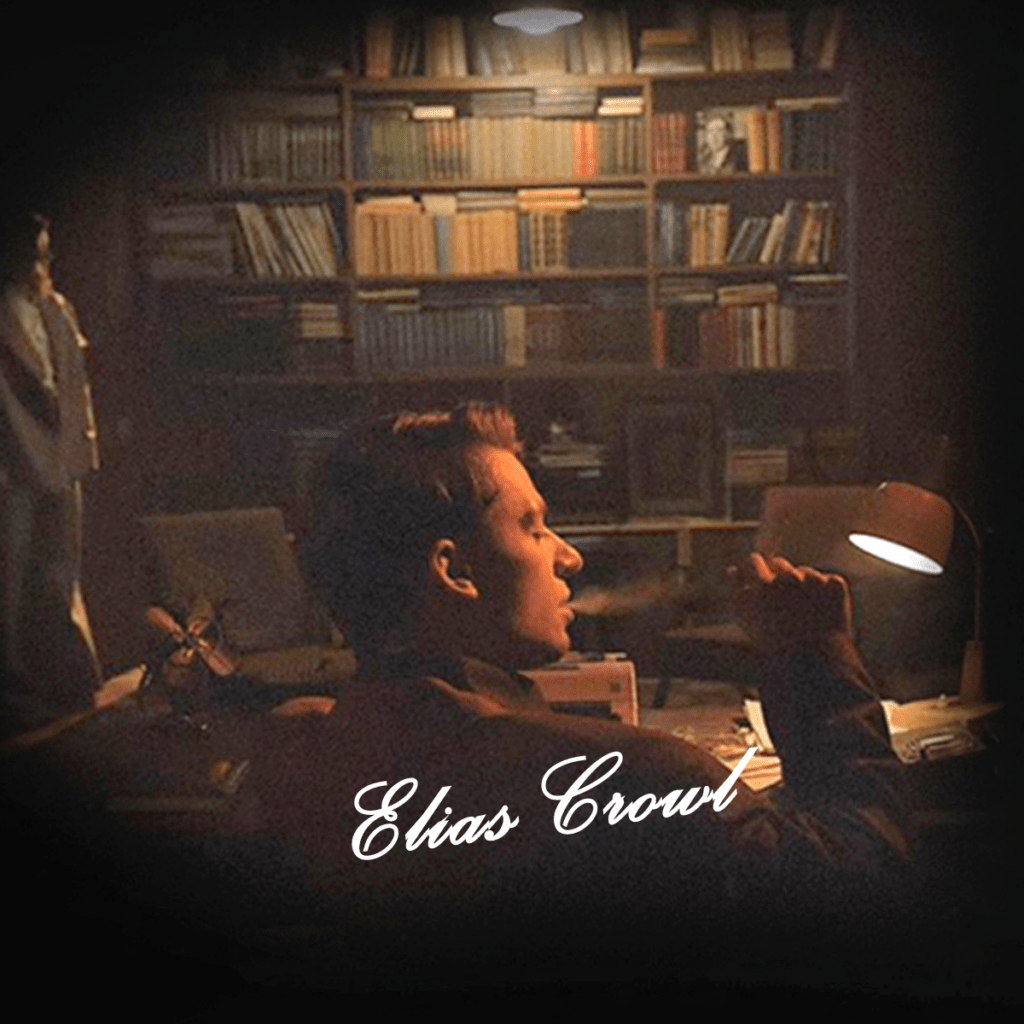
When will Volume III be released?
The third and final installment of the KLEIO Trilogy by Elias Crowl is currently in its final production phase. The release is expected between late May and early June 2026. With this concluding volume, the technoir-driven story of KLEIO reaches its gripping finale — delivering new revelations, higher stakes, and long-awaited answers to the series’ central mysteries.
In the meantime, I’ll be surprising my fans with exclusive updates and excerpts on my blog, so be sure to stay tuned for exciting news and sneak peeks, especially for those who can’t get enough of Emily Carter’s journey.