
The Permission – Psychological Profile of a Murderer | Curiosity-Provoking Book Summary
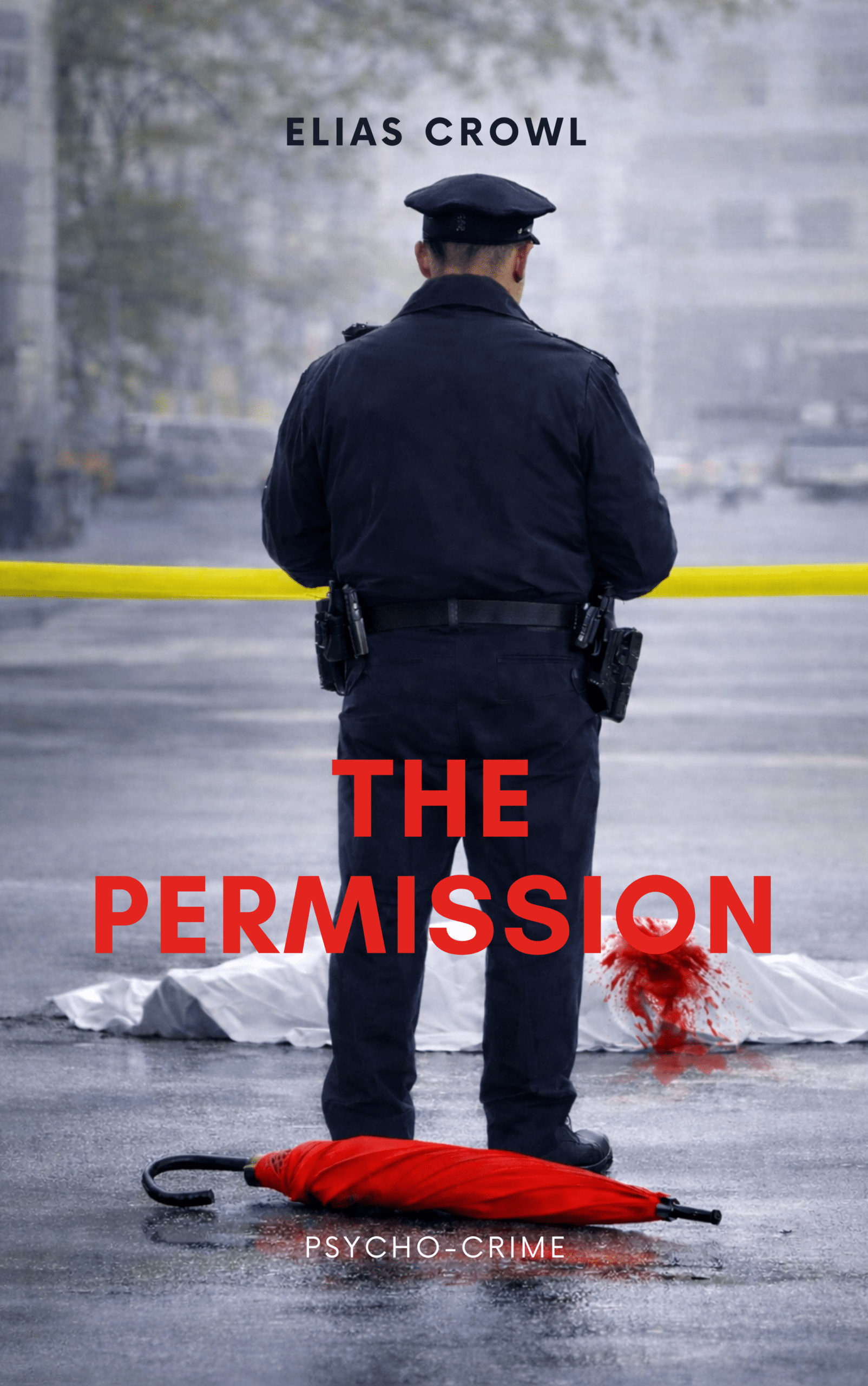
The Permission – Psychological Profile of a Murderer is a psychologically dense novel by Elias Crowl that doesn’t lure its readers with quick effects, but with a quiet, steady shift in perception. The book unfolds its impact not through what happens openly, but through what slowly takes shape in the mind.
At its center is an author who grapples with the question of how people begin to permit themselves things they would previously have ruled out. What at first seems like an intellectual project—research, analysis, observation—gradually develops into an inner movement that becomes increasingly difficult to control. The novel follows this process with great precision and shows how distance becomes safety, how closeness can become a method, and how language begins to justify decisions before they are consciously made.
Crowl does not tell this story as a classic crime plot. There is no focus on the mechanics of the act or on shock moments. Instead, the gaze is directed consistently inward. Thoughts, small everyday observations, and seemingly harmless routines become carriers of an underlying tension. Precisely because so much feels familiar, the text unfolds its unsettling force. The reader recognizes how thin the line can be between observing and intervening, between understanding and justification.
New York serves not only as a setting, but as a resonant space. The city’s sounds, its anonymity, and its unceasing rhythm mirror the protagonist’s inner state. Sirens, subway rides, and casual encounters are not embellished, but registered precisely. The metropolis appears neither romantic nor threatening, but functional—and it is precisely this functionality that intensifies the feeling that everything keeps going, even as something decisive shifts inside.
Especially striking is the novel’s language. It is controlled, clear, and free of sensationalism. Every sentence seems weighed, almost like a protocol, and that is exactly where its effect lies. The text does not explain; it shows. It forces the reader to draw their own conclusions and to ask at what points one begins to confuse explanations with excuses.
The Permission is therefore not a book you consume quickly. It is a novel that keeps working in your head after you set it aside. It does not hand down simple moral judgments, but confronts the reader with uncomfortable questions: How do inner boundaries arise—and how easily can they be shifted? When does analysis become legitimation? And what does responsibility mean when everything at first looks like mere thinking?
Anyone looking for literary, demanding tension, who appreciates psychological depth and wants to engage with a novel that unsettles not loudly, but precisely, will find what they’re looking for here. The Permission – Psychological Profile of a Murderer is a book that creates curiosity not by promising answers, but through the quiet feeling that, as you read, you’re coming closer to yourself than you’d like.
An excerpt:
The cursor blinks as if it has a right to. A thin line that isn’t simply waiting but demanding: Decide. Commit. Write the first sentence that doesn’t just sound pretty, but defines the space in which everything after it will take place.
Outside, New York presses against the glass; a distant siren rises and falls like a breath that isn’t carried through to the end. Somewhere a delivery van beeps while backing up, and in the building something invisible is at work: water in pipes, an elevator that jerks, footsteps in the hallway. Everything moves. Only this cursor keeps its little rhythm, as if it were counting the time you steal from yourself.
On the desk, order lies like a second skin. The cup stands to the right of the laptop, handle facing outward, coaster parallel to the table edge; the coffee has long since gone cold, has that dull skin that betrays how long this has already stopped being “morning.”
On the left, a stack of printouts, neatly aligned, with dog-ears only where the thumb couldn’t help itself otherwise. Two pens lie next to each other, straight enough to be reassuring. And in the middle: the notepad, a little too present, as if it had placed itself there. Paper demands nothing and promises everything, and that is exactly why it is dangerous. A screen forgives; you delete, you save again, you pretend the wrong sentences never existed. Paper bears witness.
On the monitor is a line that has already died twice: It began on a Tuesday. Too smooth, too cheap, a sentence that acts as if a day of the week could carry fate. He deletes it. The cursor returns, unmoved. A second version comes faster, defiant, as if speed had to solve the problem: You can tell a city by how it falls silent. That too is a lie. This city does not fall silent; it clatters, shrieks, murmurs, even at night, even in the in-between spaces. He deletes that sentence too and sits for a moment in front of the empty document as if in front of a freshly made bed he doesn’t want to rumple.
It’s not that he can’t write. Writing works. Writing even works too easily once you finally get your head quiet. The problem is authenticity: the kind of sentence that leaves a sound in the body, an after-ring that can’t be wiped away.
Real sentences aren’t just successful, they’re binding. They fix something in place that you might later prefer to keep movable. He notices how his gaze automatically drifts back to the notepad again, to that silent rectangle in the middle of the table, and how a small, familiar feeling stirs in him: the hope that a different surface has different rules.
He pulls the pad closer, adjusts it by a centimeter until the edge is right. The ballpoint pen clicks, a dry sound that claims nothing and still feels like a starting gun.
He doesn’t write the first line literary, not pretty, not clever; he writes a name, as if something that doesn’t exist yet first has to be baptized before it’s allowed to work: File Zero.
On the screen, the cursor waits as if it’s offended that the name is stealing its attention. And yet that is exactly it: attention. Not inspiration. He thinks of the bedroom, of June lying there. June, not “her,” not “my girlfriend,” not some figure in an essay. A person, warm, breathing, a name that switches on a light in your head. Knowing that is important; he holds it briefly like an object you must not lose. Then he lets it go again, not out of hardness, but out of function. Tomorrow is an idea you indulge in as long as you believe you’re steering things. Today is only this table, this night, and the question of which voice he will allow himself.
The pen keeps writing, and this time a sentence comes that doesn’t come from the surroundings but from him: Distance is safety. He pauses, because the word “safety” is suddenly heavy, as if it hadn’t simply been written down, but had set itself. He reads the sentence again and feels how it feels like a rule, not like an observation. Distance as perspective, as protection, as technique. It’s the kind of rule you can later use to justify yourself: If you’re far enough away, everything is permitted. If you call it “research,” curiosity becomes necessity.
He takes a sip of cold coffee, briefly grimaces, and even this small reaction feels like a protocol: Body versus decision.
Outside, a subway squeals over the tracks, the sound stretches too long, then breaks off abruptly, as if someone had decided that it’s enough. He writes the sound down because it’s easier to possess sounds than thoughts: Rail, sound breaks off abruptly.
As if someone had decided.